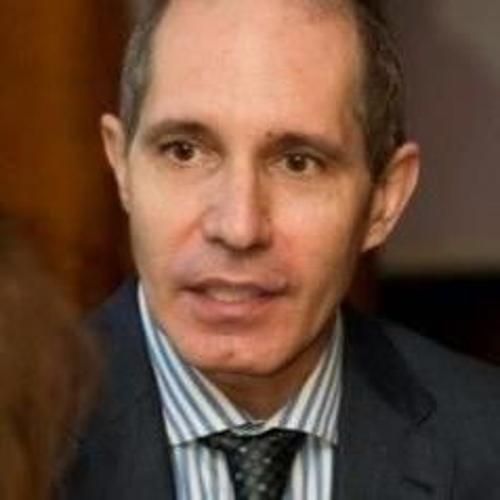
Francisco Javier
Herrero Hernández
Titular
Faculty: Facultad de Ciencias Humanas y Sociales
Universidad: Pontifical University of Salamanca
Area: Philosophy
Research group: Fenomenología, religión y racionalidad pública
Research group: Humanismo, reformas y ciencia: del Medievo a la Ilustración
Email: fjherrerohe@upsa.es
Personal web: https://diarium.usal.es/fjherrerohe/
Disponible para contactar con medios ( prensa / radio / tv )


Doctor by the Universidad Pontificia de Salamanca with the thesis El camino de Lévinas en la fenomenología. Un itinerario intelectual a partir de Husserl 2005. Supervised by Dr. Antonio Pintor Ramos.
He holds Licentiate degrees in Theology and Philosophy from the Pontifical University of Salamanca (UPSA), receiving the Outstanding Graduate Award, and a PhD in Philosophy from the same university, awarded the Extraordinary Doctoral Prize. He is currently Full Professor of Philosophy of Religion at UPSA and, since 2013, Associate Professor in the Department of History of Law at the University of Salamanca (USAL). 1) SCIENTIFIC CONTRIBUTIONS, IMPACT AND INTERNATIONALIZATION He has developed an original line of research in phenomenology and philosophy of religion, with particular attention to the rationality and public presence of religious phenomena. Within this framework, he has produced a corpus of 43 publications (2 monographs, 6 critical editions/translations, 16 book chapters and 19 journal articles), whose reception is documented in several academic platforms. Among his main publications are the monograph From Husserl to Levinas (2006), the critical edition Jean Héring: Phenomenology and Religious Philosophy (2019), and numerous articles on phenomenology of religion published in journals indexed in Scopus and ESCI/Web of Science. He has been awarded two CNEAI six-year research periods, has served as Principal Investigator in two research projects, and has participated in other collaborative projects. He currently leads the International Research Group Phenomenology, Religion and Public Rationality (UPSA) and is Principal Investigator of the DOREPH project – Religious Documentality and the Public Sphere, developed in collaboration with Maurizio Ferraris and LabOnt – Center for Ontology (University of Turin). His research profile is supported by extended stays at international institutions (Freiburg, 2007; Hochschule für Philosophie München, Feb.–Jul. 2008; Husserl Archives in Paris, Jan.–Jul. 2017; Rome, 2019 and 2021; Federal University of Santa Catarina, Brazil, Jan.–Jul. 2022). 2) CONTRIBUTIONS TO SOCIETY: KNOWLEDGE TRANSFER, PUBLIC DIALOGUE AND OPEN SCIENCE His research also seeks to translate philosophical findings into public issues and is embodied in long-standing initiatives promoting dialogue among academia, the Church and civil society, including the Yuste Dialogues, the Humanism, Science and Faith Forum, the Fernando Rielo Chair and the Domingo de Soto Chair. Another distinctive feature of his academic activity is his commitment to open science through the systematic deposit of publications in institutional repositories and their public dissemination. 3) RESEARCH TRAINING, ACADEMIC LEADERSHIP AND QUALITY ASSESSMENT He has continuously contributed to researcher training, supervising 10 completed doctoral dissertations and 2 in progress, 29 Master's and Licentiate dissertations, and 75 Bachelor's dissertations. His teaching has received highly favourable evaluations within the DOCENTIA programme. He served as Vice-Dean (2010–2013) and Dean (2013–2016) of the Faculty of Philosophy (UPSA), Director of the Master's Programme in Research in Human and Social Sciences (2015–2016), Director of the Fernando Rielo Chair (2013–2017), and has been a member of the Domingo de Soto Chair (USAL) since 2013. In teaching innovation, he directed the DECA programme Religion and its Pedagogy, implemented in 21 editions and recognised as a teaching innovation project (ID2019/073). In research evaluation and quality assurance, he served as Expert Advisor to AVEPRO from 2013 to 2018, chairing external review panels at higher education institutions in Rome. He is also a journal reviewer, conference organiser and former director of the philosophy textbook series Sapientia Rerum (BAC) from 2012 to 2016, integrating research, training and academic responsibility into a coherent and sustained career.